

AgroTerra will develop soybean seed production
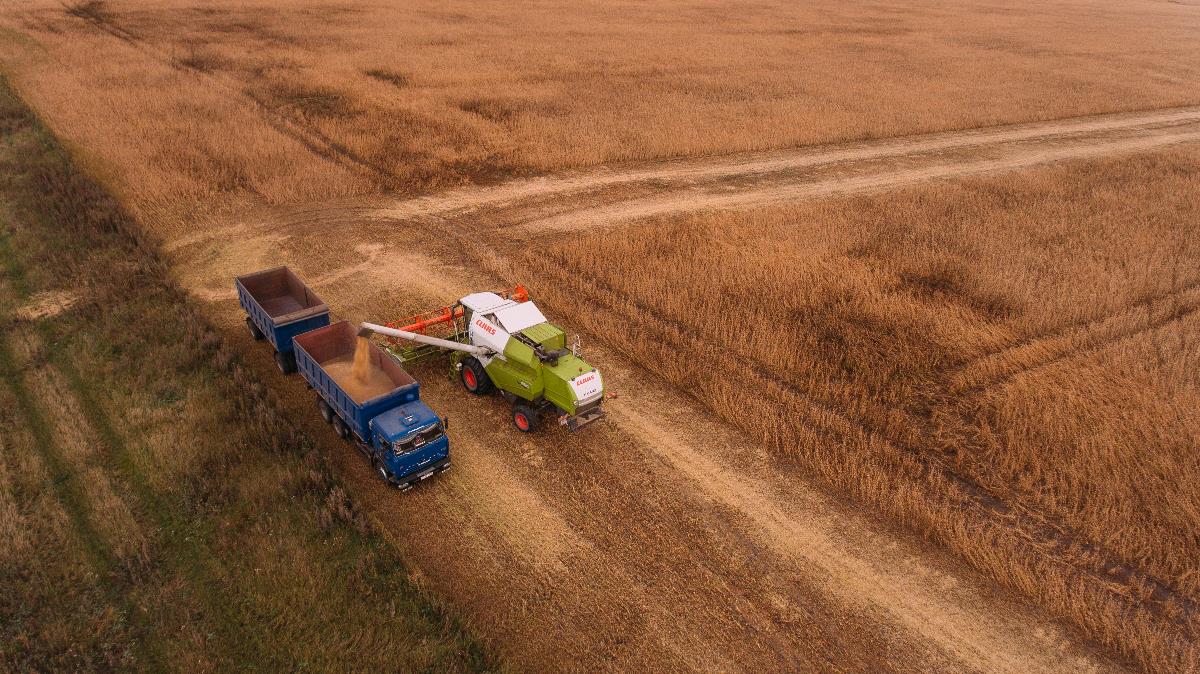
AgroTerra Holding, one of the largest soybean producers in Central Black Earth Region, is creating its own soybean seed selective programme and launching a seed line in the Kursk region. This was announced by Alexander Dashchenko, Director of the AgroTerra Integrator Group (the project involves integration into the work of the holding of neighboring enterprises) during the Field Day organized by the company with the support of the Kursk region administration. The general partner was PhosAgro-Region, Russia's largest mineral fertilizer distribution network. ‘Interest in soybeans is constantly growing; a growing number of agricultural producers understands the potential of soybeans and turn to us for seeds of tested varieties,’ said Dashchenko. - The yield of this agricultural crop is 30% dependent on the quality of the seed material, so AgroTerra uses its own seeds and builds a full production cycle from registration to cleaning and conditioning’.
Dashchenko considers it premature to assess the potential gross yield of soybeans on the farms of the holding, and adds that yield has never been the company's main goal in both seed and commercial soybean production. The priority is quality and financial results. This year, in his opinion, the quality indicators promise to be at a high level despite not the most favorable weather conditions. ‘No one expected so much rainfall in the Tula and Penza regions. But fortunately, this weather has done us a favor: the heavy rains in July saturated the soybean with moisture, and the dry and sunny weather of recent weeks has completed the ripening process just in time for the active phase of harvesting,’ he comments.
According to Dashchenko, in order to reduce the risk of adverse weather factors, AgroTerra is trying to concentrate its fields in regions where the climate is more even. In addition, the company uses its weather stations and several weather forecast services. ‘And of course we cultivate zoned varieties and do not apply fertilizers when we expect rainfall or heat. There's nothing revolutionary about it,’ he adds. We have been engaged in soya cultivation and production since 2012. During this time, we have discovered all the pitfalls and learned to bypass them. In many ways, this has been possible thanks to our experimental fields, where we are testing new varieties and technologies for soybeans. If successful, we standardize the technologies: we create flow charts and technological processes that allow us to replicate specific achievements in all farms. This year, the AgroTerra Research Centre conducted experiments with more than 40 varieties of soybeans and tested more than 35 variants with sowing rates and seeding methods against the background of different herbicides.
Soybean is one of the highest-margin crops, and this is unlikely to change in the near future, Dashchenko is confident, but he says that, like any other agricultural producer, the company would like to see a higher price for the crop. ‘As consumption increases, so will price increases,’ he expects. - But this is influenced by the volume of the new harvest and the passing residues around the world and in Russia. Prices for soybean meal and soybean oil as soybean derivatives also have an impact. AgroTerra does not plan to process soybeans on its own; it also hasn’t a goal in itself to develop an agricultural export. ‘Now Russia still imports about 2 million tons of soybeans annually and there is a shortage of domestic production. That is why we do not make mass export shipments, although we have point experience in supplying soybeans to customers in neighboring countries,’ says Dashchenko.
The company expects to grow soybeans next year as much as this year. ‘Only weather factors, reduced demand and, consequently, prices can interfere with our plans,’ Dashchenko says. In addition, the areas of AgroTerra
Integrator's partners will be added: for example, if the holding produces 5.5 thousand tons of seeds, they will be able to increase soybean crops by at least of 45 thousand hectares, the top manager calculates. He also does not rule out the possibility of expanding the area for soybean crops through state support, which can be introduced by the Ministry of Agriculture. The Agency proposes to stimulate the increase in soybean and rapeseed production in order to fully provide raw materials for processing and increase the export potential of the fat and oil sector. ‘Of course, we support this initiative. The subsidies will help Russian soybeans become more competitive, including in China, within the context of our strategy to increase agro-exports. So any support is a big plus,’ comments Dashchenko. - In addition, if the support compensates for the cost of logistics, it will be excellent. Now in order to deliver soybeans to China, it is necessary to spend about $100/ton of products for logistics. And this is when the price of soybeans in Russia and China is equal.